 Katy Drainage
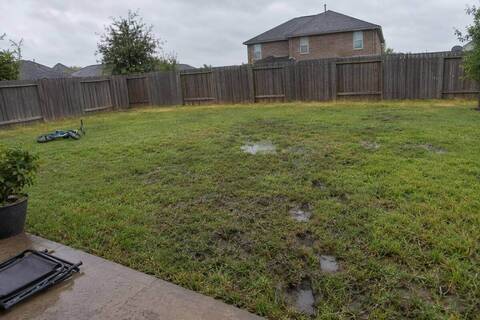
Katy yard holding water after the rain has stopped?
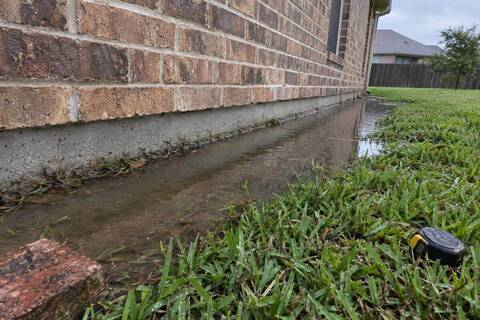
Start with what you can see from the back door. Water that sits, grass that squelches, a wet line against the slab: each points to a different cause on a flat lot, and a different fix. Describe it, and the request goes to an independent drainage contractor who works in Katy.
What Are You Seeing?
Where the Water Goes When a Katy Yard Cannot Take It
Drainage Work, Matched to the Symptom
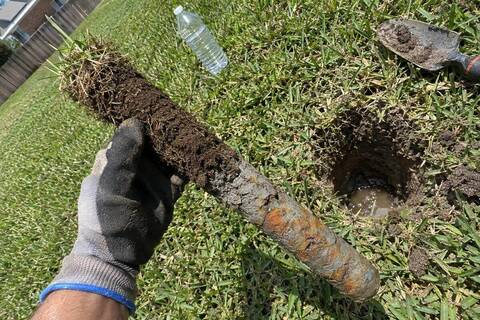
Soggy Yard Diagnosis
Working out whether the water is arriving from somewhere, or simply not leaving. The answer decides everything after it.
Diagnosis firstFrench Drains
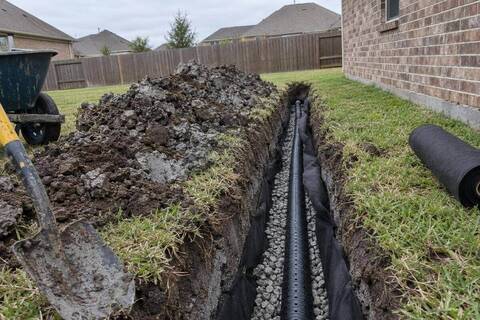
A gravel trench with a perforated pipe that gives ground water a path out. Useful on the right lot, oversold on the wrong one.
French drainsRegrading and Slope
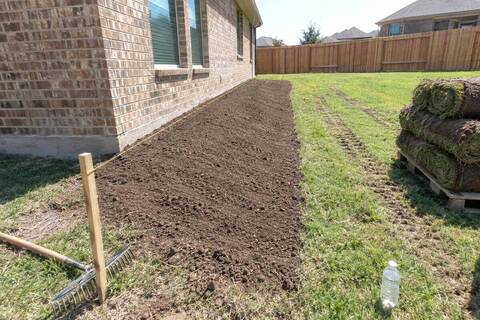
Moving soil so the ground falls away from the house and toward somewhere the water may go.
RegradingCatch Basins and Surface Drains
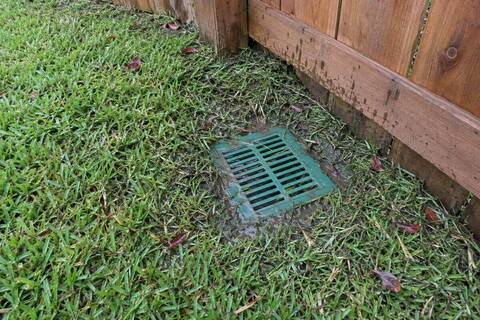
A grate at the low spot and solid pipe to an outlet, for water that pools on top.
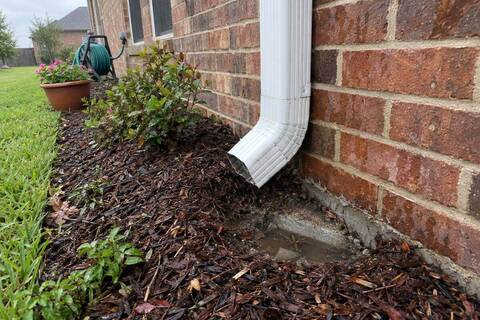
Catch basinsDownspouts and Gutter Water
Where the roof water lands, and how far from the slab it ends up.
DownspoutsDry Creek Beds and Swales
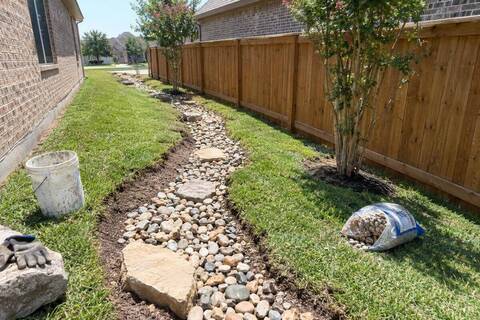
Shaped, open channels that carry surface water across a lot without a pipe.
Creek beds and swalesDriveway and Patio
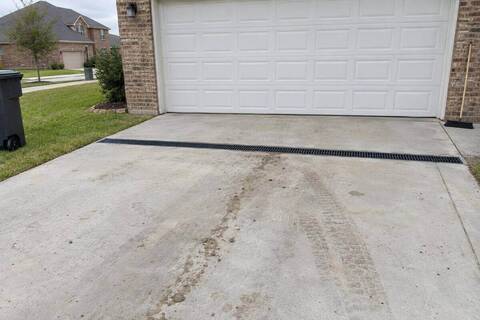
Channel drains and pitch fixes where concrete sends water the wrong way.
Concrete drainageCommercial Lots
Small commercial and multi-family sites with the same symptoms at a larger scale.
CommercialWhere Does the Water Go?
Your lot
The first job of any fix is to get water off the lawn and away from the slab. The model residential code the City of Katy has adopted asks for the ground to drop 6 inches in the first 10 feet from the foundation.
The street or the ditch
Yard water usually ends at the curb, a storm inlet or a roadside ditch. Those belong to the city, the county or a utility district, not to you.
The easement and the channel
From there it moves through drainage easements and channels maintained by public districts. A yard fix has to hand water to this system, not fight it.
The creek and the reservoir
Much of the Katy area north of I-10 drains toward Addicks Reservoir through creeks such as South Mayde Creek; much of it south of I-10 drains toward Barker Reservoir through Mason Creek and upper Buffalo Bayou.
When the last two are full, no yard drain can empty into them. That is the honest ceiling on every fix on this site. Why Katy ground holds water in the first place · Who owns which part of the path
Ten Areas, Two Counties, Two Reservoirs
Before You Call
Does this site dig the drain?
No. It takes your call or form and passes it to one independent drainage contractor who works in the Katy area. That contractor walks the yard, prices the fix and does the work, and your agreement is with them.
Will a French drain keep my yard dry in a hurricane?
No drain does that, and a contractor who promises it is telling you something the ground here cannot deliver. A drain gives the water a faster way out of the low spot. When the street, the ditch and the creek are all full, it has nowhere to go.
What is the walk-through?
A first look at the lot by the contractor: where the water sits, where it came from, where it can legally and physically be sent. Ask them up front whether they charge for it; the terms are theirs.
My sprinkler lines run right where the water pools. Who handles those?
A licensed irrigator. In Texas, altering or repairing an irrigation system is licensed work under the TCEQ, so a drainage crew works around the lines and a licensed irrigator moves or repairs them.
I live in Cinco Ranch. Is that Katy?
For a drainage request, yes, but the county matters. Cinco Ranch straddles the Fort Bend and Harris county line, Mayde Creek and Cimarron are in Harris County, and the two counties answer drainage questions through different offices. Each area page names the right one.
Tell Someone Where the Water Sits
Call and describe the spot: how long the water stays, where it seems to come from, how close it gets to the house. The request goes to one independent Katy-area drainage contractor, who calls back to set up a walk-through.
Call (346) 239-7247 Use the Form