 Katy Drainage
 Home / Soil and Grading
Why Katy ground holds water
Katy was a rice town before it was a suburb, and rice farmers wanted soil that kept water in the field. The same ground now sits under the lawns. Here is what is under the grass, why water perches on it, and what grading can and cannot change.
There Is a Soil Called Katy
Soil scientists name soil series after the place they were first described, and one of the common series in this part of Texas is the Katy series. Its official description from the USDA Natural Resources Conservation Service reads like a list of the reasons a Katy lawn stays wet.
What the description says: a fine sandy loam on top, over a subsoil that runs from loam to clay loam and gets more clayey with depth. Permeability is “moderately slow.” Slopes run 0 to 3 percent, and most areas are under 1 percent. A seasonal water table forms in the upper layers for short periods in the cool months or after excess rain. The series is mapped mainly between the Brazos and San Jacinto rivers, Harris and Fort Bend counties included, and was used mainly for rice and grazing.
Source: USDA NRCS Official Series Description, KATY series. Not every Katy lot sits on this series; a contractor or a soil map will tell you what is under yours.
Read that as a homeowner and three things stand out. The top few inches drain well enough, so water soaks in fast at first. The layer under it slows that water down. And with almost no slope to push it sideways, it sits in the upper soil until it evaporates or the grass uses it. That is the “perched” water table: not the real groundwater far below, but a temporary one riding on top of the tighter layer.
The City of Katy says of itself that it was founded on rice farming in the late 1800s. Rice needs a field that holds a flood. The prairie soil did that job for a century before the subdivisions arrived.
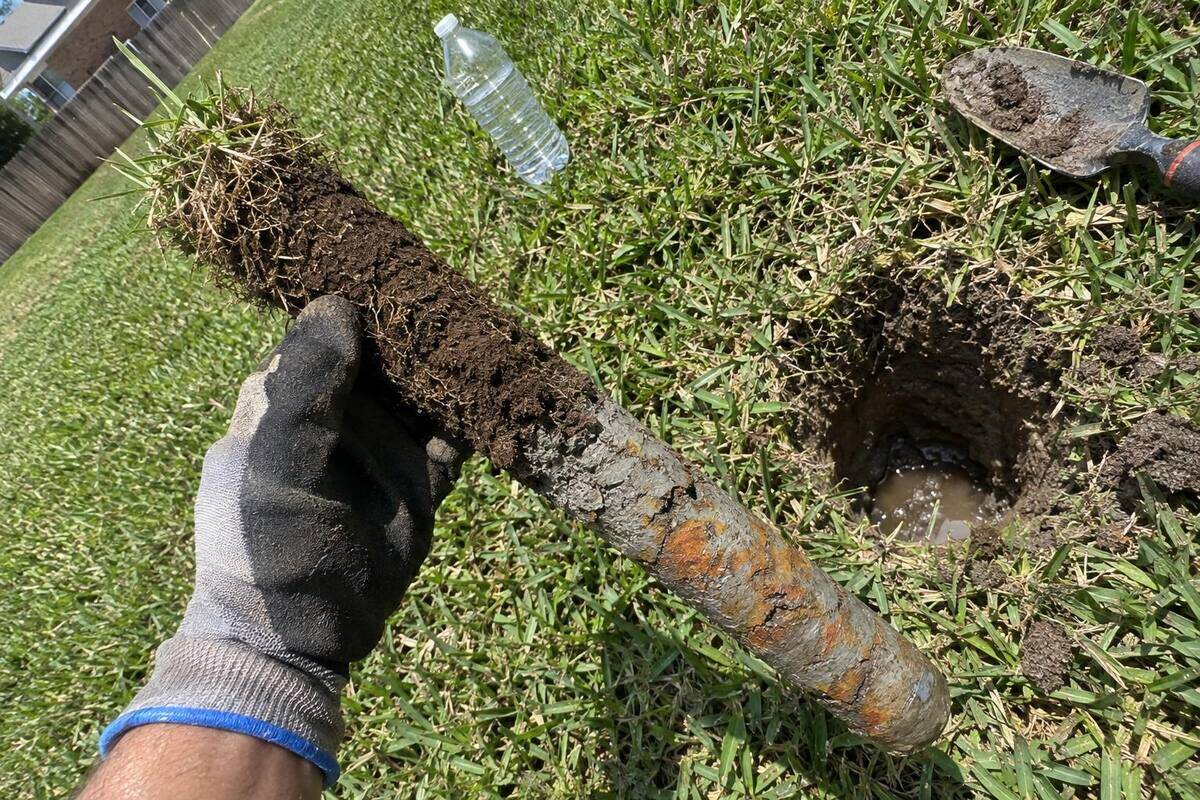
What “Graded to Drain” Means on a Flat Lot
The City of Katy has adopted the 2021 edition of the International Residential Code. That code asks for the ground next to a house to fall away from the foundation at least 6 inches in the first 10 feet, so water runs off the slab edge instead of along it. A production lot is meant to leave the builder shaped to meet that and to send the rest of its water toward the street or a rear swale.
On prairie this flat, the margin is thin. A few things eat it up after the builder leaves:
- Flower beds built up with fresh soil and mulch until they sit higher than the lawn beyond them.
- Sod laid on top of old sod, which raises the yard an inch at a time.
- A new patio or extended slab that blocks the side-yard swale the builder cut.
- Fence posts, a shed pad or a play area that dams the path the water used to take.
- Soil that settled over a trench dug for cable, gas or irrigation, leaving a shallow ditch pointed the wrong way.
Every one of those is worth ruling out before blaming the soil, because each is cheaper to undo than a drainage system is to build.
The Limits Worth Knowing Before Anyone Starts
A lot lower than the street
If the curb is higher than your yard, water cannot run to it by gravity. The options narrow to collecting it and moving it another way, and that is a bigger job.
A full storm system
When the inlets and ditches are already running full, a regraded yard has nowhere to hand the water. It will still pond until the street drains.
The whole region sinking
A 2022 University of Houston study reported by Community Impact put Katy’s subsidence at about 2 centimeters a year. That moves the whole neighborhood together, so it rarely explains one wet corner, but it is why old grade assumptions age.
Before the Walk-Through
- 1
Time it
After the next rain, note how many hours the water stays in the low spot. Ponding that is gone by evening and ponding that lasts two days are different problems.
- 2
Follow it
Walk the yard during the rain, not after. Watch where the water comes from: a downspout, a neighbor’s yard, the patio, the street.
- 3
Probe it
Push a screwdriver into the lawn in a dry spot and in the wet spot a day later. A big difference in resistance points to water held in the upper soil.
- 4
Look at the slab
Check how much of the slab edge shows above the soil and mulch. Beds that cover the edge are worth mentioning to the contractor.
Have Someone Read Your Lot
A contractor can tell you in one visit whether the problem is the soil, the grade or where the water arrives from. Call or send the details.
Call (346) 239-7247 Send the Details