 Katy Drainage
 Home / Services / Foundation Perimeter Drainage
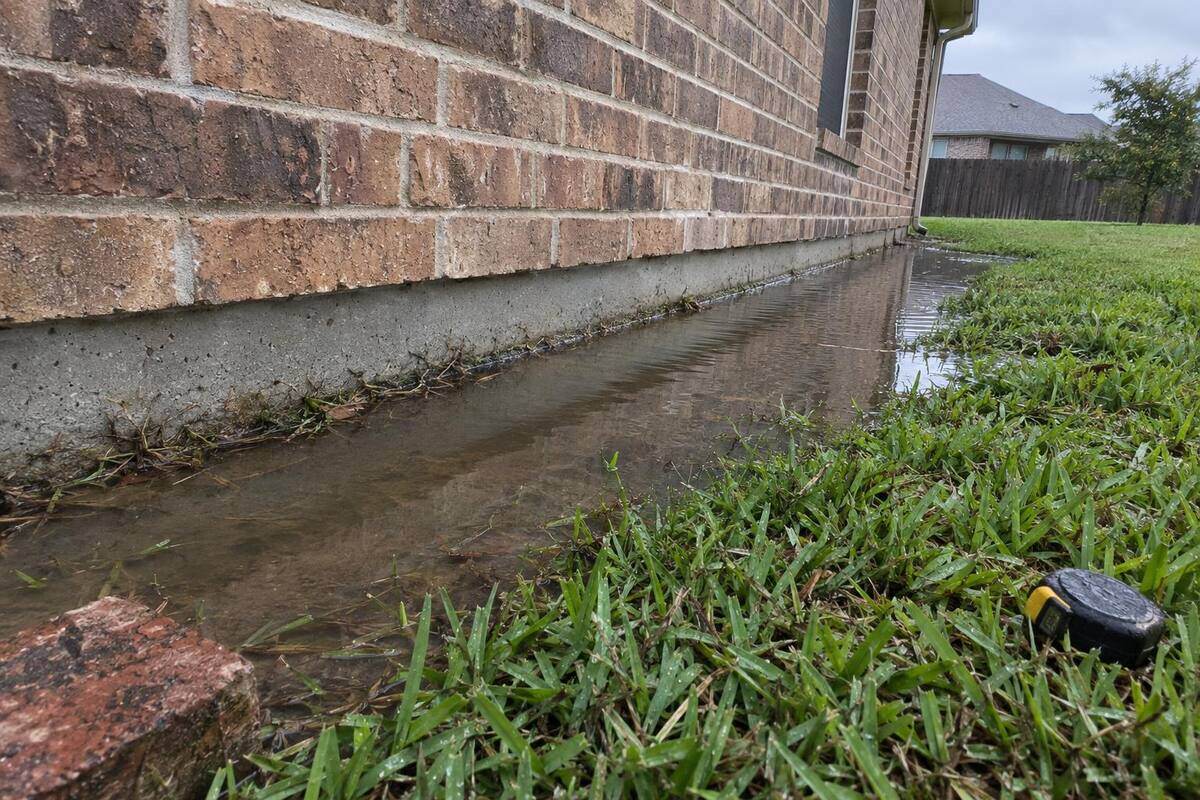
Water standing against the slab
A strip of water along the back wall after a storm, or a silt line on the slab edge, means water is collecting where the ground should be carrying it away. Perimeter drainage is about the soil and water next to the house, not the house itself.
Common Causes, in the Order to Check Them
- Beds and mulch built up higher than the lawn, trapping water against the wall.
- Downspouts emptying inside the first few feet from the slab.
- Ground that has settled next to the house so it slopes toward the slab instead of away.
- A patio or walkway pitched toward the house.
- A side-yard swale blocked by a fence, gate or air-conditioning pad.
Most of these are found in a single walk-around. The 2021 residential code the City of Katy has adopted calls for a 6-inch fall in the first 10 feet from the foundation; a level against the slab shows quickly whether a lot still has it.
What Perimeter Drainage Work Looks Like
Pull the beds back
Lower the soil and mulch so the slab edge shows and the bed slopes out, not in.
Move the roof water
Extend or bury downspout lines so the water leaves past the 10-foot mark.
Restore the fall
Regrade the first strip of lawn so it drops away from the wall.
Give it an exit
A surface drain or swale along the wall when the lot has no other way out.
Where this page stops
Perimeter drainage keeps water off the slab edge. It does not diagnose or repair a foundation. Cracks in the slab or brick, doors that stick, or floors that slope are for a foundation repair company, and it is reasonable to have one look before drainage work if you see those signs.
Houses in this area are slab-on-grade or pier-and-beam. On an older pier-and-beam house, water standing in the crawl space is a question for the contractor on site.
Get the Water Off the Wall
Tell the contractor which wall stays wet and where the nearest downspouts are.
Call (346) 239-7247 Send the Details